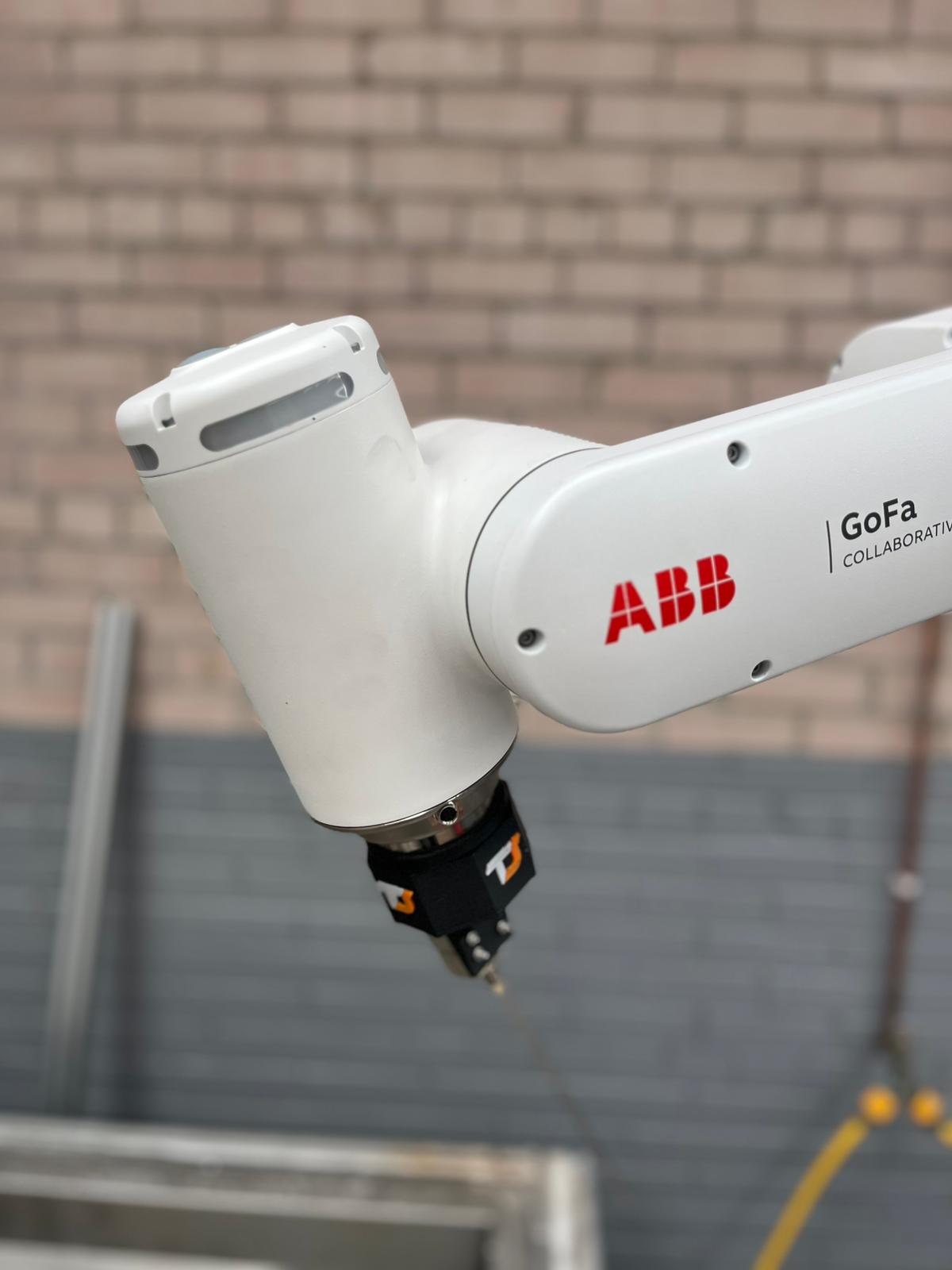
TextureJet is proud to announce a breakthrough in precision deburring and large component part marking with the integration of collaborative robotics into its STAT® system. Developed in partnership with ABB Robotics, this new solution, utilising ABB’s GoFa Ultra Precise CoBot, offers manufacturers a smarter, safer, and more flexible approach to deburring and part marking a wide range of metal components.
Deburring—the removal of sharp edges created by machining—is a critical step in ensuring the safety, integrity, and appearance of metal parts. Even small burrs can compromise performance, damage machinery, and pose risks to operators. By removing them, manufacturers can reduce friction, enhance handling safety, improve aesthetics, and extend component lifespan.
“Deburring may seem minor, but its impact is huge across industries from aerospace and automotive to medical and power generation,” said Jonathon Mitchell-Smith, CEO & Founder, Texture Jet. “Precision is not optional. Every component must meet the highest standards of quality and safety, and our new robot integration delivers exactly that.”
Our unique electrochemical Jet machining process can also deliver part marking direct onto large components using this new Collaborative Robot integration. This solution will eliminate risks due to micro cracking from lasers or using acids from chemical etching to create the component identifying marks. The process can also produce detailed images or logos which a shot peening process cannot produce.
The collaboration with ABB Robotics brings the flexibility and intelligence of co-bots to the STAT system, allowing parts of varying shapes and sizes to be processed with consistent, controlled results. This integration eliminates heat zones, raised edges, and other fatigue issues commonly associated with traditional deburring methods.
Key benefits of the robot-assisted STAT deburring solution include:
- Easy programming for rapid deployment
- Smaller, lighter footprint for versatile factory integration
- Lower cost compared to conventional robotic systems
- Exceptional flexibility for different part sizes and shapes
This innovation promises to be a game changer, offering manufacturers across multiple sectors a reliable, high-precision method for improving component quality while boosting productivity.